For over forty years, la Biennale de Lyon has presented two landmark events on the French and international cultural scene: the Lyon Biennale – Contemporary Art and the Biennale de la danse. Our 18th edition of Contemporary Art, opening on 19 September, will live up to that legacy and share the same ambition as the recent dance edition — which drew over 240,000 visitors in September 2025 — to transform Lyon, its metropolitan area and the Auvergne-Rhône-Alpes Region into a unique hub where artistic creation connects with the widest possible audience, where art speaks to every citizen, and where global influence takes root in a vibrant local territory.
This Lyon rendezvous will pick up where the Venice Biennale leaves off — opening in May 2026 — to become the pulsing heart of contemporary art through the autumn. By commissioning new works from artists and offering fresh visitor experiences, we aim to shape a vision of the world enriched by diverse perspectives and cultures.
Every edition draws nearly 300,000 visitors to our exhibitions, and more than 2.7 million to public installations. These figures underscore our commitment to accessibility for all. Through year-round mediation with schools, social services, healthcare organisations, associations and local authorities, we reach out to everyone — students, families, underserved communities and people with disabilities — inviting you to explore the works through talks, workshops and collaborative projects. Putting you at the heart of an increasingly inclusive framework is central to our social and environmental responsibility. The Lyon Biennale sparks contagious curiosity, even inspiring some visitors to join artists in creating works as part of our “Biennale en territoires” programme.
This 2026 edition spans key venues across the Lyon metropolitan area. Les Grandes Locos — a historic SNCF site revitalised by the Lyon Metropolis — hosts a vast hall perfect for monumental works, delivering a striking sensory experience. Joining the Musée d’art contemporain, the Institut d’art contemporain de Villeurbanne and the Fondation Bullukian are two new sites: the Musée des Tissus, hosting an exhibition tied to its textile heritage with support from the Auvergne-Rhône-Alpes Region, and the musée des Confluences, where an installation responds to the permanent “Sociétés, le théâtre des Hommes” display. Installations also animate public spaces like the musée des Beauxarts cloister, Part-Dieu metro station and SaintAntoine car park with LPA, reimagining the urban landscape and engaging city dwellers.
The Lyon Biennale is also a premier professional platform, drawing artists, curators, gallerists and institutions worldwide for works, dialogue and reflection. Our last edition hosted the General Assembly of the International Biennial Association, linking us with peers across the globe.
Deeply rooted in its territory, the Biennale draws strength from the Government, Lyon Metropolis, Auvergne-Rhône-Alpes Region and City of Lyon — to whom we extend our heartfelt thanks. It connects to global art hubs while mobilising a rich network of cultural, community and economic partners. This edition features exceptional collaborations with international delegations, foundations and companies, enabling ambitious new productions and supporting artists’ research. This vibrant ecosystem unites public and private actors in advancing contemporary creation.
In a world of rapid change and image overload, we champion time for contemplation — inviting you to pause, look closely, escape and hear what the invited artists have to say. Engaging with today’s social, political and economic realities, their works challenge assumptions, fuel democratic debate, expand our collective imagination and inspire new ways of living together.
Laurent Bayle, President of la Biennale de Lyon
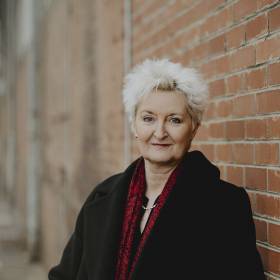
Cécile Bourgeat, Executive director of la Biennale de Lyon
Since its creation in 1991, the Lyon Biennale – Contemporary Art has established itself as France’s leading event in its field. Its widely acclaimed model is rooted in a strong territorial anchorage. Drawing on a particularly dynamic regional ecosystem, it engages institutions of all scales — public and private alike — to showcase the region’s diverse geographical, historical, economic, societal and, above all, cultural resources. Built on exchange, collaboration and innovation, and supported by long-recognised expertise, the Lyon Biennale mobilises a network of skills that enables artists to create bold, site-specific works in dialogue with their surroundings. Whether through its unique “Biennale en territoires” programme — developed by a dedicated team in direct collaboration with residents and communities throughout the region — or the “Résonance” programme, which encompasses over 400 events orbiting the main theme, the Lyon Biennale embodies an inclusive, unifying vision designed for the long term.
Deeply attuned to the visitor experience, the Biennale unfolds across multiple venues with each edition, offering a continually reimagined exhibition programme structured around a central theme that allows the narrative to resonate across time and space through the works presented.
By inviting curators from diverse backgrounds, the Biennale ensures constantly refreshed perspectives, spotlighting both the territory’s rich heritage and contemporary vitality while opening doors to international scenes. For this 18th edition, the curatorship has been entrusted to writer and art historian Catherine Nichols.
Based in Berlin with Australian roots, Catherine Nichols brings her sensitive gaze on Oceania alongside deep knowledge of the European scene and extensive global connections.
Following a focus on the Middle East in 2022 and France in 2024, the 2026 edition invites a broad roster of international artists, including many from the Pacific — particularly Australia and New Zealand — a vibrant, diverse scene still too little known in Europe.
More broadly, Catherine Nichols has chosen to centre this edition on the notion of economy — not in the conventional sense, but as articulated by French artist Robert Filliou: a “poetic economy” that intertwines art with life. Rarely explored from this angle, it proves profoundly revealing of our world’s state. Viewed through the lens of exchanges and relationships, it probes the ripple effects on local and global ecosystems.
Focusing on economy — a recurring theme in her prior research — felt entirely natural to Nichols as she engaged with the region, and Lyon in particular: a city of trade since antiquity, a key Silk Road hub, a major economic powerhouse and a fluvial crossroads. Her thinking crystallised upon discovering the traboules. These iconic Lyonnaise passageways — whose name derives from the Latin trans-ambulare (“to pass through”) — once allowed workers to move swiftly between streets via interior courtyards, staircases and corridors. In the 19th century, the silk workers known as the Canuts used them to carry fabric rolls sheltered from the rain. They later gained fame during World War II as secret routes for the Resistance.
It was this notion of passage — which she makes central to her vision — that shaped her overall approach. Inviting us to follow her narrative, Nichols guides us through atypical, historic sites, and above all, with this new edition, to “pass from one dream to another.”
Isabelle Bertolotti, Artistic director of the Lyon Biennale of Contemporary Art